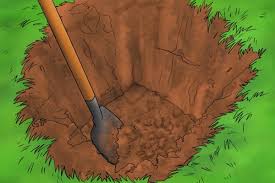
It was in the summer, when the days were warm and empty and the nights were brimming with June bugs and jasmine, that my brother and I dug a hole.
There was nothing practical about our hole. We simply wanted to know what was down there, what fabulous treasure might be buried beside our home in Garden Grove, California.
There is something deeply seductive about digging a hole, especially if your imagination is seasoned with a liberal dash of boyhood. Each new spadeful of earth is a silent promise, a sirenic whisper of a wonderful secret about to be revealed. The deeper you go, the more imminent discovery becomes. You laugh, and you wonder, and you dream and you sweat a bit, too.

As Denny and I sweated over our hole that day, taking turns with our wood-handled shovel, I began to dream of a tool that would excavate without effort, that would slice into the ground like a sharp knife slices into butter. A magic shovel, one that could dig its way right down into the center of the earth, unveiling one spectacular secret after another.
We didn’t have a magic shovel, but we did have a shovelful of determination, and by midday our hole was nearly nine feet deep. Since it was becoming more and more probable that no treasure had been buried in this spot, we decided to tunnel under the house, visions of a secret, subterranean clubhouse swirling in our brains.
Fortunately, our father came home and stopped us before we had burrowed more than five feet from the bottom of the hole, else I might not be here to tell this story. At his insistence we filled in our glorious hole, but not before placing a few select toys in the tunnel…toys which are undoubtedly still there today, waiting for some future archaeologist to unearth.

That was many years ago, but I’ve never lost my fascination with holes, and the secrets they might harbor. It is a fascination that has lured me into many places – into caves, into cellars, into sewers where dank, midnight corridors mingle unseen in a pastiche of mystery.
And finally, perhaps inevitably, it lured me to northern Arizona, where the grandest hole of all compels nearly five million people a year to stand on its edge and gaze reverently into its storied depths.
I worked first as a houseman for the Fred Harvey Company, stocking maid’s carts and extracting dirty linen from hotel rooms. Then I drove shuttle buses along the West Rim, and checked people into their rooms as a desk clerk, and carried their bags as a bellman. Not very illustrious jobs, perhaps, but they kept me where I wanted to be, doing what I wanted to do – living beside that incomparable hole, and exploring its tantalizing spaces.
Eventually, I became a park ranger.

And it was there, at the Grand Canyon, where I learned that buried treasure is not always pirate’s gold; that it can be a golden river, and a golden wilderness, and a chiseled rainbow of poignant rocks. It is, in fact, these eloquent rocks, these layers of lost worlds, that together comprise the greatest secret any hole could ever divulge.
“The Grand Canyon”, wrote John Wesley Powell, the fearless, one-armed geologist who in 1869 led the first expedition to venture through that mysterious void, “is the Library of the Gods”. And in this library are the stories of worlds that vanished millions of years before dinosaurs ever thundered across the land.
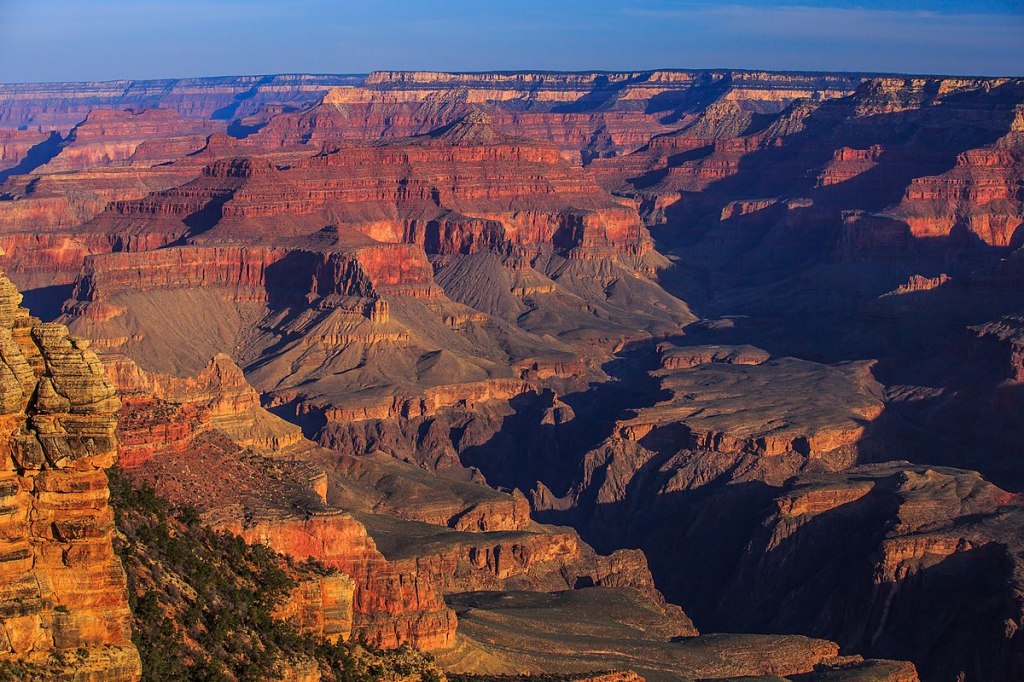
This grand library, though, is not limited to the Grand Canyon; that’s just where the biggest windows are.
The ancient landscapes – or seascapes – that time and tumbling water have unveiled so majestically at the Canyon existed elsewhere, too, and lie buried, like hidden treasure, beneath nearly every cityscape on the planet.
Stroll down a street in your own town and you may well be walking upon thousands of feet of planetary history, the profound detritus of a trillion yesterdays. Dig a hole in this detritus – a very deep hole, as the Colorado River once did – and you are tunneling into buried treasures the likes of which no pirate ever dreamed.
Sound impossible? It’s not. All you need is a shovel.
A very special shovel.
A magic shovel.

But don’t bother looking in your local hardware store, because it won’t be there. Where you will find it is in your own mind, in the enchanted realm where knowledge and imagination intersect to breathe life into breathless fact. With imagination for a handle and information for a blade – the kind of hard-won knowledge geologists have wrung from the earth through centuries of study – you can mount your own personal expedition into these lost and hidden worlds.
Let me show you what I mean. For many years I lived in Flagstaff, Arizona, a delightful mountain town built in the shadow of the San Francisco Peaks. Because Flagstaff is only 70 miles from the Grand Canyon, it’s rocky “world history” is largely the same, which means that when I stood beside my house on Navajo Drive with my magic shovel, its blade was already sharp with knowledge. I was ready.
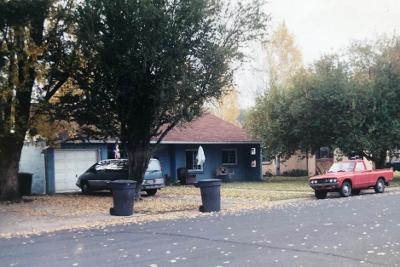
And so I began to dig.
The first few feet carry me through the blanket of basalt that covers much of Flagstaff, since it sits amidst a volcanic field, but very soon I break into the Moenkopi Formation, and because I have a magic shovel I can look into its gleaming surface and see reflected the world that once was, when this red rock was being deposited along a broad, swampy river delta some 230 million years ago. There are no birds in this queer, long ago world – no flowers or mammals either – but it’s the dawn of the dinosaurs. Moving through the fern tree forest, on the edge of a river, I can see a fearsome, 10-foot-long giant of a lizard with a sail back and a mouth full of razor-like teeth.
It will one day be called a Dimetrodon.

Down.
The Moenkopi is a modest layer here, and very soon I am in a hard, white limestone that forms the rimrock at the Grand Canyon. The Kaibab Limestone. A glance at my shovel shows a shallow sea, 250 million years old, where squid-like nautaloids and primitive sharks swim above fields of shellfish and swaying crinoids.

Down.
For 300 feet or more I dig through the remnants of this Paleozoic sea, until the rock turns sandy and the shovel reveals a vast, Sahara-like desert stretching as far as the eye can see. The desert smothered this area for 10 million years, and there’s several hundred feet of hard sandstone to dig through before I reach a soft, red shale, the remains of a strange, tropical forest that thrived here 280 million years ago. I consult the shovel, and see giant horsetails, towering Seussian-like trees, and dragonflies with wingspans as long as my arm.

Down.
The years fly away as my magic shovel carries me deeper and deeper into the earth and into the past, through a thousand feet of sometimes soft, sometimes hard brick-red rock. This is the remnant of a broad, coastal plain, where shallow seas came and shallow seas went a long time ago.

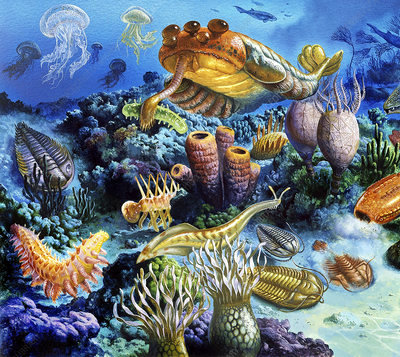
Two thousand feet below Route 66 I encounter the petrified corpse of a once mighty sea – today we call it the Redwall Limestone – that engulfed a huge section of the Southwest for some 40 million years. A lot of limestone can be laid down in 40 million years, and my hole is several hundred feet deeper before I reach a green shale that was deposited at the edge of an ancient ocean 540 million years go. The land was lifeless then, but a glance at the shovel shows me a sea full of sea worms, brachiopods, crinoids, jellyfish, and trilobites, those long-gone titans of the Cambrian seas, who pioneered that most useful of inventions – the eye.
Down.
Down through the remains of even older oceans, and deltas, and tidal mudflats. Down through rocks that were conceived when single-celled algae was the most sophisticated life on the planet. Down and down until 4,000 feet below the surface, I at last reach the Vishnu Schist, the basement rock, the mind-wrenching relic of a nameless sea whose waves broke upon a nameless shore some 2 billion years ago.
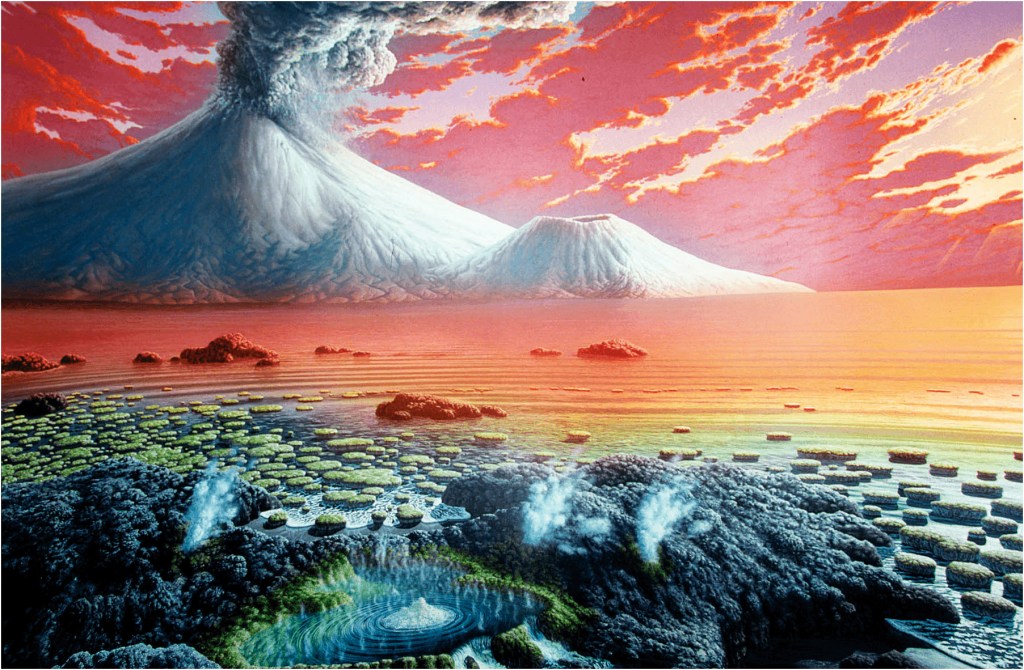
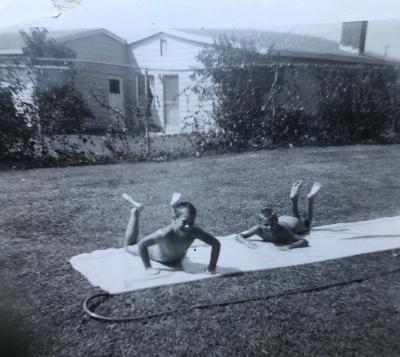
Yes, my brother and I dug a hole once, looking for buried treasure. And though we didn’t find it that day, I knew that if I kept trying, someday I surely would. And I was right. I did find it – a treasure of perspective and wonder, a treasure as rich and fabulous as life itself.
All I needed was the right shovel.
 Natural Wonders
Very good and very nice, Randy. I like it! Loo0ks likeit could be a book or booklet?
Randy
Thanks, Randy! It may be a chapter in a book, someday😊